If you’ve ever crossed the Arthur Ravenel Jr. Bridge into Mount Pleasant, you’ve seen the marsh, the water, and those wide Lowcountry views. One thing you probably have not seen? A mountain.
It’s one of the most common questions I hear from buyers relocating to Charleston: Why is it called Mount Pleasant if there’s no mountain?
Why Is It Called Mount Pleasant, SC If There’s No Mountain?
Short answer: The name comes from an 18th-century plantation and likely referred to the slightly higher ground in the area. At the time, even a few extra feet of elevation mattered because higher land was more desirable for avoiding flooding in the Lowcountry. That same idea still influences how buyers evaluate real estate in Mount Pleasant, SC today.
Where the Name Mount Pleasant Came From
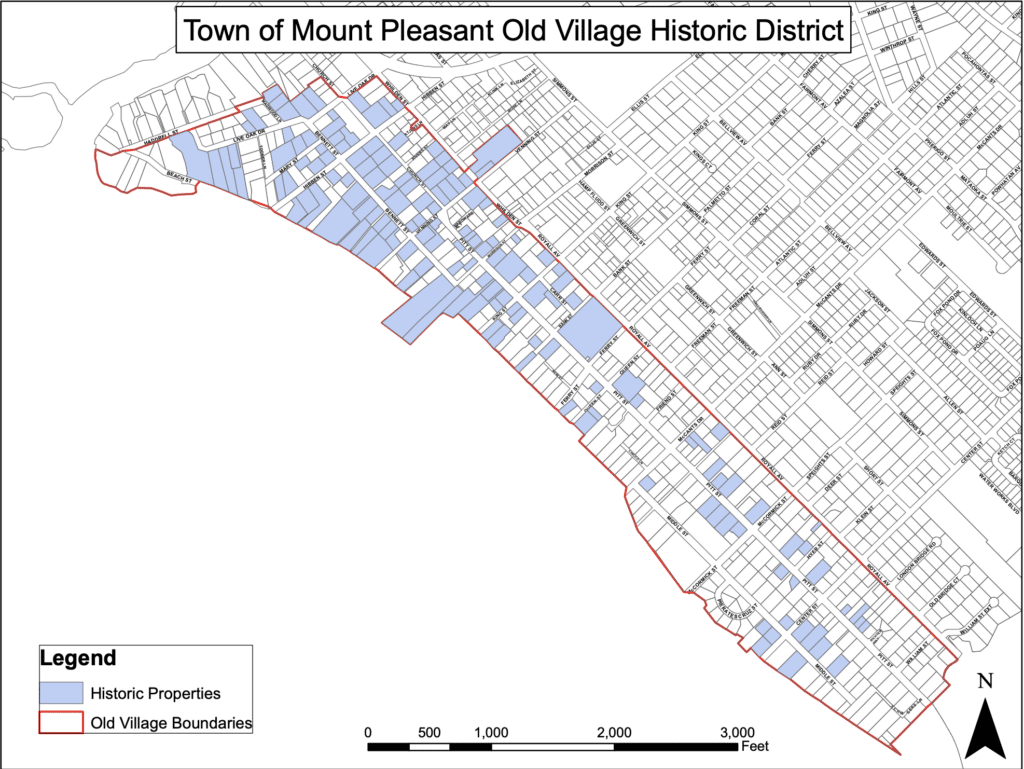
The name “Mount Pleasant” comes from a plantation, not geography. In the mid 1700s, Jacob Motte, the Charleston City Treasurer, owned a 67-acre estate in what we now call the Old Village. His home, known today as the Hibben House, remains one of the oldest properties in the area.
In 1803, James Hibben purchased the plantation, divided portions of the land into town lots, and officially named the area Mount Pleasant. The town later grew from several smaller villages, including Greenwich Village, Lucasville, Hilliardsville, and the original village of Mount Pleasant. Incorporated in 1837, Mount Pleasant remained a small coastal community for generations.
The word “Mount” was often used for prominent estates, but in the Charleston area it also suggested something practical: slightly higher, drier ground.
How “High” Is Mount Pleasant, Really?
In most of Mount Pleasant, you’re looking at elevations between:
- 10 to 20 feet above sea level in many neighborhoods
- 20 to 30 plus feet in some of the higher inland communities
- As low as 5 to 10 feet closer to marshes and waterfront areas
Mount Pleasant is not elevated in the way most people think, but in the Lowcountry, even a 3 to 5 foot difference can change everything.
Why Elevation Still Matters
This part of the story becomes more relevant when you’re looking at homes in Mount Pleasant today.
Elevation still impacts:
- Flood zone designation
- Flood insurance requirements and costs
- Long-term property value
For example, a home at 18 feet above sea level may fall into a very different flood zone than one at 10 feet just a few streets over.
That’s why elevation is not just a fun fact when you’re looking at homes in Mount Pleasant, SC. It can shape flood insurance, resale value, and how confident you feel in the home long term.
In a coastal market like Charleston, small changes in elevation can make a big difference. Flood maps are part of almost every serious home search conversation, especially in areas like Mount Pleasant, Isle of Palms, and Sullivan’s Island.
You might fall in love with a home near the water, then realize it requires flood insurance or carries higher long-term costs. On the flip side, homes just a few feet higher often hold value better because of that lower risk profile.
There May Not Be a Mountain, But the Name Still Fits
Today, Mount Pleasant is known less for elevation and more for lifestyle. Historic homes in the Old Village, neighborhoods like Carolina Park and Park West, proximity to beaches, and quick access to Charleston have made it one of the most sought-after places to live in the Lowcountry.
The irony is that the original idea behind the name, higher ground and a more desirable place to live, still shows up in how buyers think about Mount Pleasant real estate today.
Mount Pleasant continues to attract buyers for the same reasons people were drawn to the area centuries ago: location, livability, and in some cases, slightly higher ground. The priorities have changed over time, but the area’s appeal has not.
Is Mount Pleasant, SC the Right Move for You?
Thinking about moving to Mount Pleasant or the Charleston area?
Here’s the takeaway:
- The name refers to elevation, not a mountain
- High ground still impacts flood risk and long-term value
- Mount Pleasant continues to attract buyers for the same reasons it has for generations: location, livability, and access to the coast
Thinking about moving to Mount Pleasant or the Charleston area? Beyond schools, commute times, and neighborhood feel, details like elevation, flood zones, and long-term value matter more than many buyers realize.
If you’re starting your search, I’m happy to help you make sense of the nuances that come with buying in the Lowcountry. Message me and let’s map out your move.